₹101 Shagun: Meaning, When to Give It, and Why the Extra Rupee Matters
Why ₹101 is the most common everyday shagun amount in India, what the extra ₹1 actually represents, and when ₹101 is the right choice versus stepping up to ₹501 or higher.
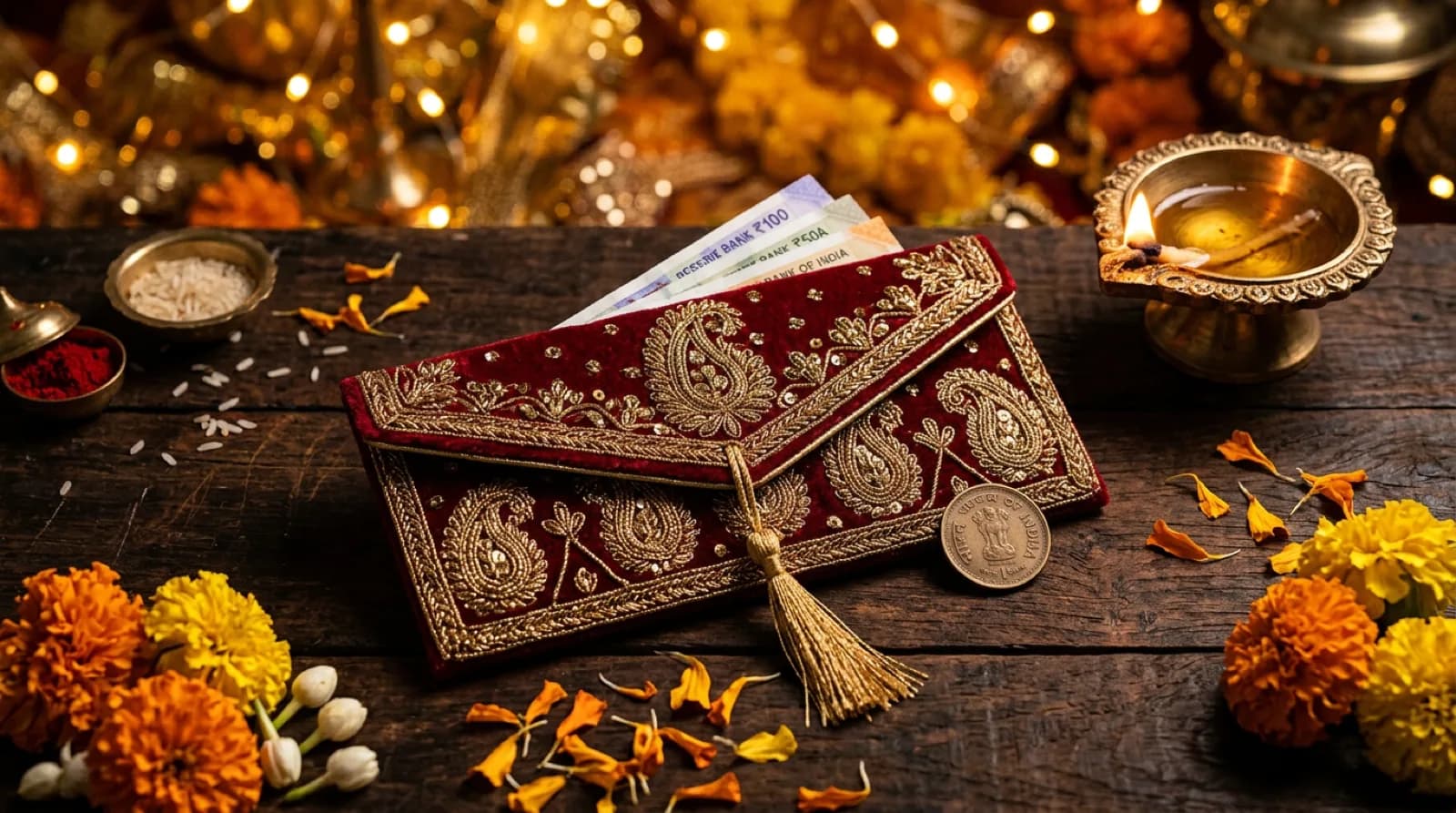
Key takeaway
₹101 is the most common shagun amount in Indian homes — the figure most families reach for when they want to mark an auspicious moment without making the gift the focus. This guide explains where the…
Quick meaning
₹101 is a round ₹100 plus an extra ₹1. The +₹1 makes the gift indivisible and open-ended — a wish that blessings continue rather than ending on a closed amount.
What does ₹101 shagun mean?
₹101 is one of the most widely used shagun amounts in Indian households. The full amount is made of ₹100 (a complete, recognisable unit) plus ₹1 added on top. The ₹1 coin is not decoration; in most traditions it is the entire point of the gift. Round numbers like ₹100 or ₹500 are felt to be ‘closed’ — the amount has been counted, sealed and finished. Adding ₹1 reopens it: the gift becomes indivisible, the blessing becomes ongoing, and the relationship is symbolically extended.
Because ₹101 is small enough to give comfortably and meaningful enough to feel intentional, it has become the default ‘starter’ shagun across many Hindu, Sikh and Jain families. You will see it tucked into envelopes at naming ceremonies, slipped into a child’s hand at festivals, placed on a thali during griha pravesh, or added to a gift packet during a small puja.
Why the +₹1 matters
The added ₹1 carries more cultural weight than the ₹100 below it. A few overlapping ideas explain why families have kept this practice for generations:
What the extra rupee represents
- Continuity — the blessing has not been ‘closed off’ at ₹100. Prosperity is wished to keep growing.
- Indivisibility — ₹101 cannot be cleanly halved, which mirrors the wish that the relationship between giver and receiver remains undivided.
- Open-ended growth — in many North Indian families this is described as ‘paisa rukna nahi chahiye’, meaning the flow should not stop.
- Respect for the receiver — a closed round number can feel transactional, like a payment. The +₹1 signals this is shagun, not settlement.
When ₹101 is the right amount
₹101 is what you reach for when you want to be present and respectful but the occasion does not call for a heavy gift. Common situations where it fits naturally:
Occasions where ₹101 works well
- Naamkaran (baby naming ceremony) — typically given to the child along with a blessing.
- Small home pujas — Satyanarayan katha, Lakshmi puja, or family yagya where you are attending as a relative or neighbour.
- Festival visits — Diwali, Raksha Bandhan, Bhai Dooj when visiting family, especially for younger children.
- Birthdays of nieces, nephews, and grandchildren — often in combination with a small gift.
- Annaprashan (first-rice ceremony) — added to a gift for the baby.
- Token shagun added to a larger physical present (a clothing gift, jewellery, household item) to ritually ‘activate’ it.
- Mundan (first haircut) and other early childhood rituals.
When ₹101 is too little
It is important to say this plainly: ₹101 is not the right shagun for every occasion. Weddings, engagements, and major life events usually call for higher amounts because the cultural expectation — and often the practical hospitality cost to the host family — is much greater.
Do
- Use ₹101 as a top-up on a larger gift at a wedding.
- Give ₹101 freely for everyday auspicious moments — it is never wrong, only sometimes light.
- Round up to ₹501 or ₹1,100 if you are close family at a wedding or engagement.
Do not
- Use ₹101 as the only shagun for a wedding from your immediate family.
- Worry about ‘how it looks’ when giving ₹101 to children or for small rituals — it is the standard.
- Mix it with even-numbered notes inside the envelope (₹101 + ₹100 = ₹201 stays auspicious, but ₹101 + ₹50 = ₹151 is cleaner).
How to give ₹101 respectfully
The amount is small but the gesture matters, so a little care in presentation goes a long way. Most families follow some version of these conventions:
Presentation tips
- ✓Use a red, gold, or printed shagun envelope rather than handing cash directly.
- ✓If possible, include one crisp ₹100 note and one ₹1 coin rather than worn notes.
- ✓Give with the right hand, or with both hands, especially to elders.
- ✓Touch elders’ feet (or offer a respectful pranam) when the moment is family-traditional.
- ✓Add a brief written line on the envelope if it is a child — ‘Aashirwad sahit’ or ‘With love, [your name]’.
- ✓For digital shagun, send ₹101 with a short blessing message rather than a bare transfer.
Regional and family variation
₹101 is most strongly established in North Indian Hindu, Sikh, Punjabi, and Marwari families, but it is widely understood across India. South Indian Hindu families sometimes prefer different amounts (₹116, for example, in some Tamil and Telugu households) but the underlying principle — a round amount plus a small auspicious addition — is similar. In Sindhi families ₹101 is common as a token, while larger amounts are reserved for the bigger ritual moments. In modern urban families across communities, ₹101 is essentially universal for everyday auspicious giving.
₹101 vs other common amounts
| Amount | Cultural feel | Best for |
|---|---|---|
| ₹51 | Token / very light | Children at festivals, casual visits |
| ₹101 | Standard everyday shagun | Naming, small pujas, birthdays, top-ups |
| ₹501 | Stronger blessing | Close relatives at engagements, smaller weddings |
| ₹1,100 | Major occasion shagun | Weddings, big anniversaries, housewarming |
| ₹2,100 | Significant milestone | Close-family weddings, business opening |
| ₹5,100 | Very high respect | Immediate family weddings, parent-to-child |
Modern context: cash, envelope, or UPI?
₹101 is so embedded in everyday Indian giving that it has adapted comfortably to every format. Physical envelopes are still the most emotionally satisfying for in-person family gatherings — the act of placing the envelope on a thali or in a child’s hand is part of the blessing. For relatives in other cities, UPI with a short note has become normal. Many digital invitation platforms now let guests send shagun directly to the host’s UPI ID along with their RSVP, which is especially useful when ₹101 from each guest adds up across a large guest list.
Final thoughts
₹101 is small in value and large in meaning. It is the amount that quietly carries the everyday spiritual life of Indian families — the gesture you make when you want a moment marked, a child blessed, or a ritual acknowledged without ceremony or spectacle. Understanding why the +₹1 is there, and giving it with a little thought, is what turns a hundred-rupee note into shagun.
Yaad rakhein: Shagun ka exact amount se zyada important hota hai aapka niyat, pyaar aur blessing. Amount sirf ek symbol hai.
Helpful links
Keep exploring — invitation hubs
Templates, occasions, and wording — strong paths from this article into the product surface.
FAQs – ₹101 Shagun: Meaning, When to Give It, and Why the Extra Rupee Matters
Is ₹101 enough shagun for a wedding?
From distant family or acquaintances, yes. From close family, friends, or senior colleagues, ₹501 or ₹1,100 is more typical. ₹101 works well as a top-up on a larger gift.
Why is the extra ₹1 coin so important?
The ₹1 turns a closed round amount into an open-ended one. It symbolises continuity — the wish that the blessing does not end at a fixed sum.
Can I give ₹101 digitally over UPI?
Yes. Digital ₹101 carries the same cultural meaning as a physical envelope, especially when paired with a short blessing message in the transaction note.
Is ₹101 acceptable at a naming ceremony?
₹101 is the most common amount at naamkaran, mundan, annaprashan, and similar early-childhood rituals.
Should I give ₹101 plus a physical gift, or only one?
Both is common and welcome. ₹101 added to a clothing or jewellery gift is felt to ‘activate’ the present with shagun energy.
Read next
Continue your learning journey with these related guides.
Shagun & traditions
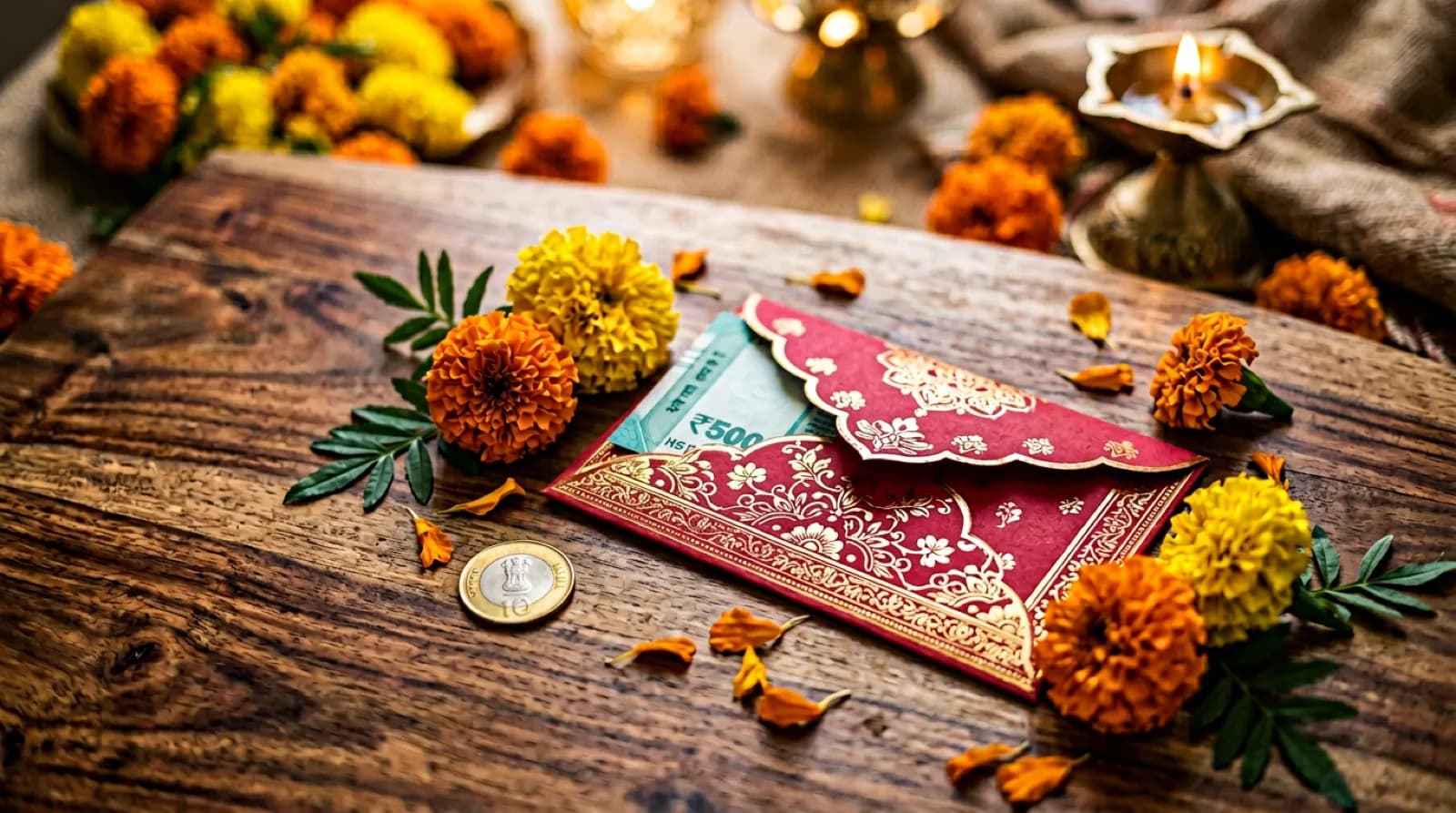
₹501 Shagun: Meaning, Cultural Significance of Five, and When to Give It
Why ₹501 is the default shagun for engagements and close-family functions in India, what the number five represents culturally, and how it sits between ₹101 and ₹1,100.
5 min read
Shagun & traditions
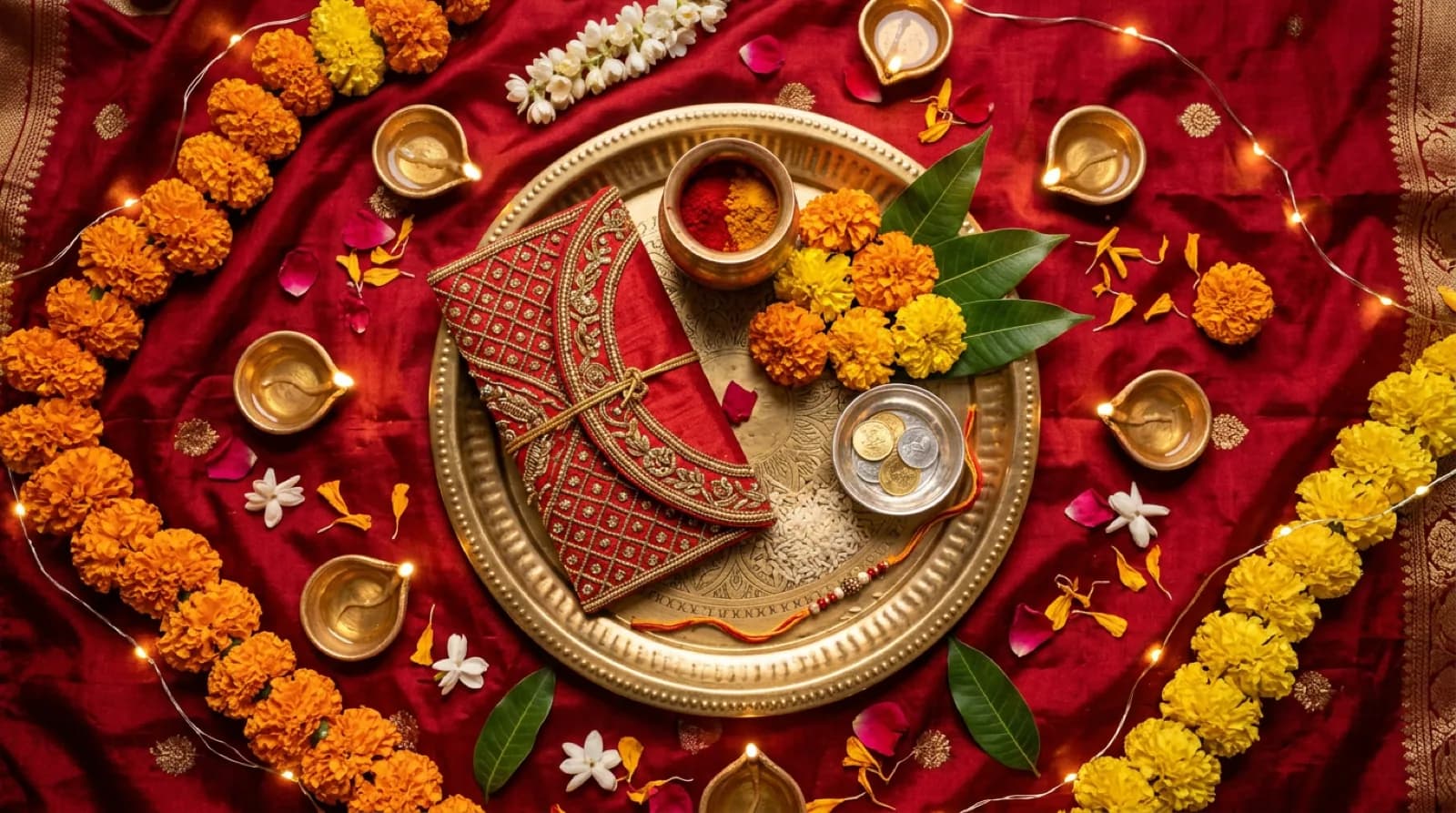
₹1,100 Shagun: The Classic North Indian Wedding Amount Explained
Why ₹1,100 is the default wedding shagun across North India, the cultural weight of the number eleven in Hindu tradition, and when ₹1,100 is exactly right — versus when to step further up.
4 min read
Shagun & traditions
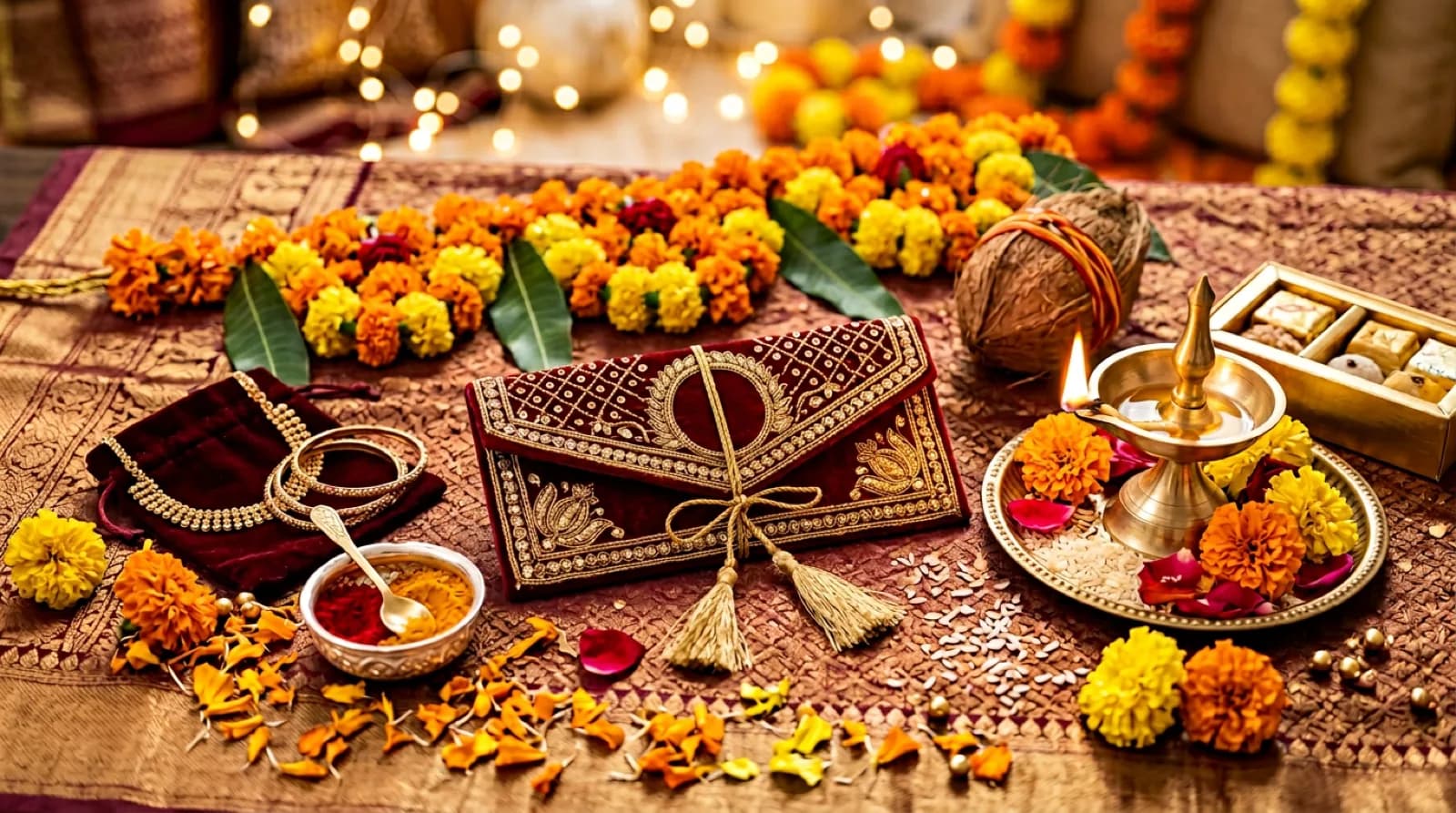
₹2,100 Shagun: The Close-Family Wedding Amount and the Significance of 21
Why ₹2,100 is the standard shagun amount from close family at Indian weddings, the cultural meaning of twenty-one in Hindu thought, and when ₹2,100 is exactly the right step above ₹1,100.
5 min read
Shagun & traditions
₹5,100 Shagun: The Immediate-Family Amount and the Symbolism of 51 Shakti Peeths
Why ₹5,100 is the immediate-family shagun amount at Indian weddings, the deep symbolism of 51 in Hindu thought — from the Shakti Peeths to the Sanskrit alphabet — and how it works as both an individual and pooled gift.
6 min read
Planning
What Details Should Every Invitation Include: The Complete Checklist for Indian Events
Ek complete invitation me kuch cheezein mandatory hain, kuch optional, aur kuch situational. Yahaan ek systematic checklist — must-have details, important-but-optional details, multi-day function ke liye special considerations, aur woh small details (parking, kids policy, dress code) jo guest experience ko make-or-break kar dete hain.
10 min read