₹1,100 Shagun: The Classic North Indian Wedding Amount Explained
Why ₹1,100 is the default wedding shagun across North India, the cultural weight of the number eleven in Hindu tradition, and when ₹1,100 is exactly right — versus when to step further up.
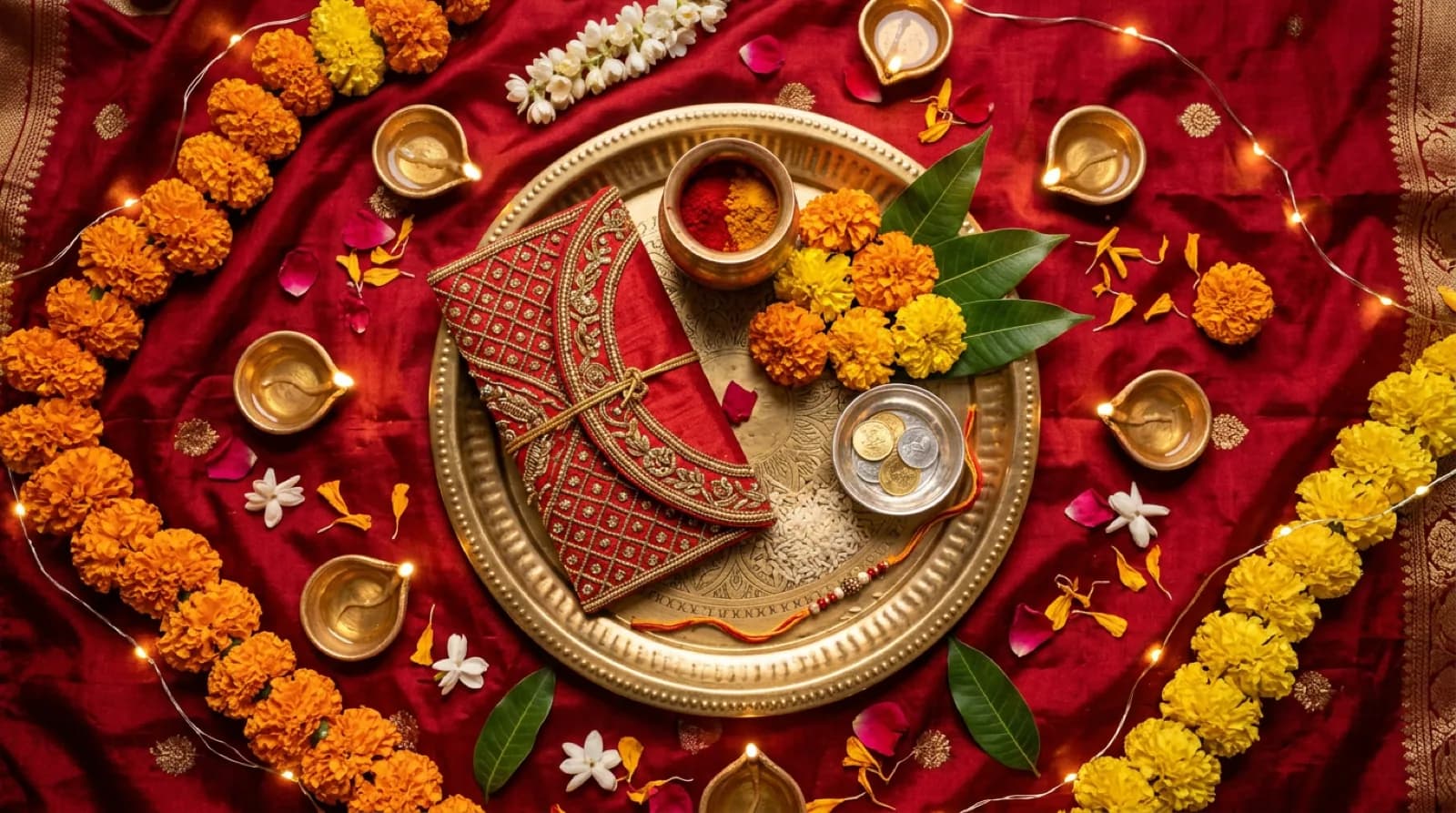
Key takeaway
₹1,100 is the amount most North Indian families think of when they think ‘wedding shagun’. It is the default for close family friends, cousins, senior colleagues, and most second-tier wedding guests.…
Quick meaning
₹1,100 combines the auspicious weight of eleven — associated with Ekadasha Rudras and ritual completeness — with the +₹1 continuity logic that makes any amount feel like shagun rather than payment.
Why ₹1,100 became the default wedding amount
If you ask older relatives across Punjab, Haryana, Delhi NCR, UP, Bihar, Rajasthan, MP, and most of North India what is the ‘right’ shagun for a wedding, ₹1,100 is the answer that comes back most often. The figure has become a kind of cultural reference point: high enough to mark a major life event, accessible enough that most middle-class families give it without strain, and structured cleanly around the auspicious number eleven plus the continuity-carrying +₹1 from the same logic as ₹101 and ₹501.
The cultural weight of 11
Eleven shows up repeatedly in Hindu ritual life, which is why amounts built around it carry an air of ‘serious blessing’. The most common associations are:
Where 11 appears in tradition
- Ekadasha Rudras — the eleven forms of Rudra (Shiva), invoked in many Vedic ceremonies.
- Eleven items in many puja sankalpa lists (eleven lamps, eleven offerings, eleven mantras).
- Ekadashi — the eleventh day of each lunar fortnight, observed as a fast in Vaishnav and many other traditions.
- Eleven-day rituals after birth, death, and major life events in several communities.
- Eleven-repetition mantra counts in many household practices.
Eleven, in this cultural reading, is associated with completeness of offering — not as in ‘finished’, but as in ‘properly given’. Combined with the +₹1 that opens the amount toward continued growth, ₹1,100 carries the message: this is a fully-considered blessing, and may it keep giving.
When ₹1,100 is the right amount
₹1,100 is most strongly associated with weddings, but it appears at several major life events. Typical occasions where ₹1,100 reads as appropriate:
Where ₹1,100 fits
- Weddings from close family friends, cousins, and second-tier relatives.
- Engagements and roka where you are direct family or particularly close.
- Major housewarming (griha pravesh) functions of close relatives.
- Significant business openings or shop inaugurations of close friends.
- Milestone anniversaries — 25th, 40th, 50th — of family elders.
- Mundan, annaprashan, or naamkaran of immediate family’s children if you want to give meaningfully.
- Large religious functions where you are participating as a sponsor.
₹1,100 vs ₹501 — when to step up
The shift from ₹501 to ₹1,100 happens when the relationship is closer or the occasion is more central. Some practical signals:
Do
- Give ₹1,100 if you are a close family friend, first cousin, or sibling of the host attending a wedding.
- Use ₹1,100 if the host family has personally hosted you for meals or major occasions in the past.
- Step up to ₹1,100 if you would be visibly under-giving at ₹501 — senior colleagues at a junior’s wedding, for example.
Do not
- Default to ₹1,100 for distant or one-meeting acquaintances — ₹501 is enough.
- Mix ₹1,100 with an even top-up that breaks the auspicious structure (no ₹1,100 + ₹100 = ₹1,200; use ₹1,100 or skip to ₹2,100).
- Feel that ₹1,100 from immediate family is sufficient — parents, siblings, and very close uncles typically give ₹2,100, ₹5,100 or more.
How to give ₹1,100
Because the amount marks an important occasion, presentation matters more than at smaller amounts. The convention in most families is:
Presentation
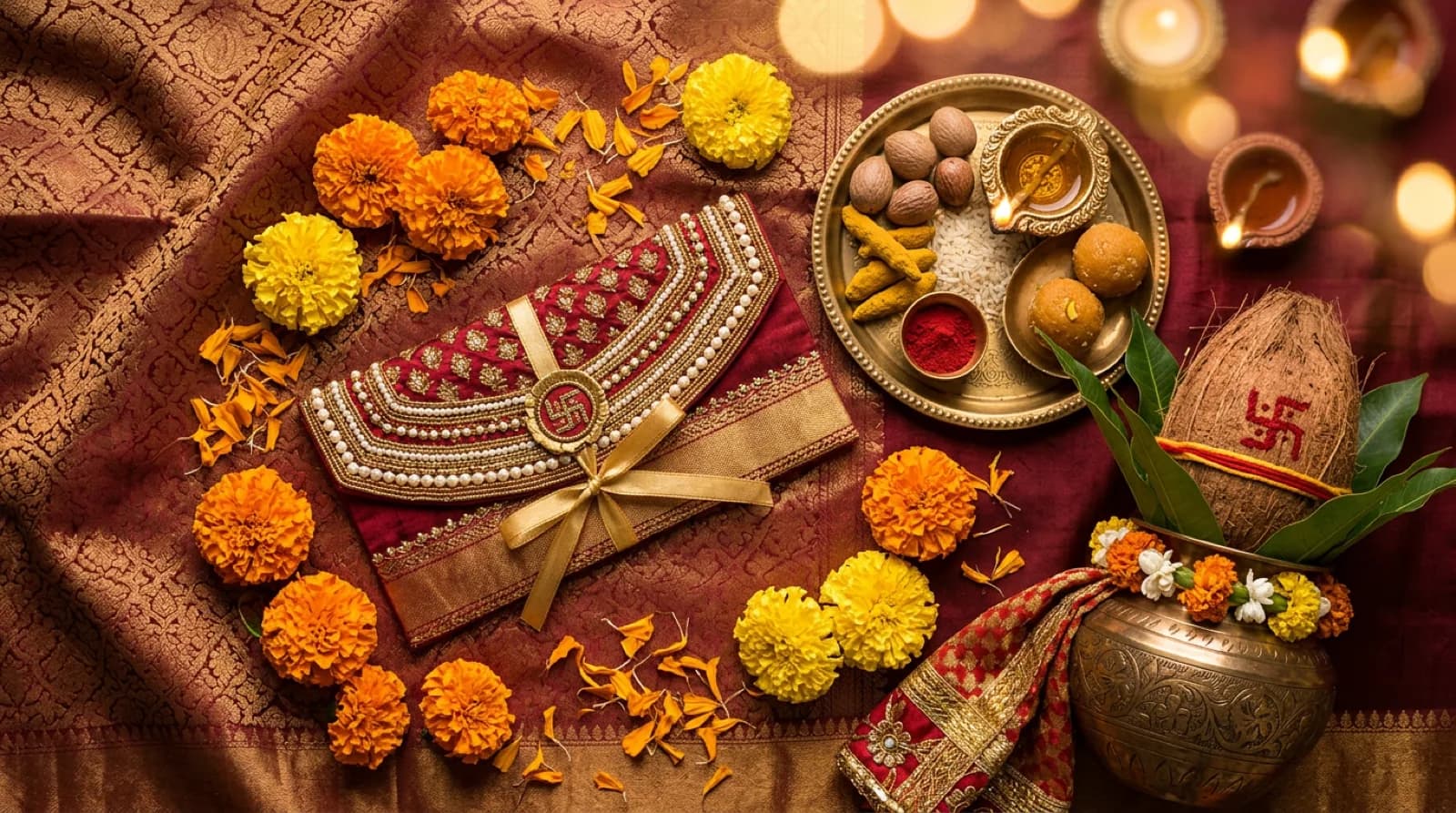
- ✓A formal embroidered or printed shagun envelope — not a plain bank envelope.
- ✓Crisp notes — eleven ₹100s and one ₹1 coin, or one ₹1,000 + one ₹100 + one ₹1.
- ✓Often paired with the bride or groom’s name written on the envelope.
- ✓Given during a clear ritual moment — milni, varmala, after the pheras, during welcome, or while greeting the couple at the reception.
- ✓Touched to the forehead briefly before being placed on the thali or handed over, in some North Indian families.
- ✓Accompanied by a verbal blessing, especially from elders to younger couples.
Regional context
₹1,100 is most strongly established as a wedding amount in Punjabi, Haryanvi, Marwari, Sindhi, Gujarati, and broad North Indian Hindu households. In Bengali weddings the amount may be similar but framed as ‘ashirvad’ with slightly different presentation conventions. In South Indian Hindu weddings — Tamil, Telugu, Kannada, Malayali — the cultural equivalent often lands at ₹1,116 or ₹1,001, with the same logical structure: a recognisable amount plus a small auspicious addition. In Sikh weddings ₹1,100 is common from close relatives, and the gesture is often paired with sewa or langar contributions.
Modern context: pooled and digital shagun
Two modern shifts are worth noting. First, ₹1,100 is increasingly given digitally via UPI, especially by relatives who cannot physically attend a wedding. The cultural reading carries over — the meaning of ‘1,100’ does not depend on the format of the note. Second, in friend groups and cousin groups, pooled shagun is increasingly common: six cousins put in ₹1,100 each toward a larger combined gift of ₹6,600 or ₹11,000. This works as long as each individual’s contribution still respects the auspicious-amount logic.
Final thoughts
₹1,100 is the amount that says ‘this matters’ without saying ‘I am making a point’. It is what cousins, close friends, neighbours of decades, and respected colleagues give when they want their presence at a wedding to be felt long after the day is over. The eleven carries history; the +₹1 carries continuity; together they make ₹1,100 one of the most quietly meaningful numbers in modern Indian life.
Yaad rakhein: Shagun ka exact amount se zyada important hota hai aapka niyat, pyaar aur blessing. Amount sirf ek symbol hai.
Helpful links
Keep exploring — invitation hubs
Templates, occasions, and wording — strong paths from this article into the product surface.
FAQs – ₹1,100 Shagun: The Classic North Indian Wedding Amount Explained
Is ₹1,100 enough for a wedding from close family?
From cousins and family friends, yes. From siblings, parents, or very close uncles and aunts, ₹2,100 or ₹5,100 is more typical.
Why ₹1,100 and not ₹1,000?
₹1,000 is a closed round amount; the cultural reading is that it feels finished. ₹1,100 adds the auspicious eleven plus the continuity of the +₹1 logic.
Is ₹1,100 acceptable in South Indian weddings?
Yes, and it is increasingly common across regions. Some South Indian families traditionally use ₹1,116 or ₹1,001, but ₹1,100 is widely respected.
Can I give ₹1,100 over UPI?
Yes. Digital ₹1,100 is now standard at modern Indian weddings, especially for guests who cannot attend in person.
Is ₹1,100 too much for an engagement?
Not at all — ₹1,100 is well within range for close-family engagements. Distant family typically gives ₹501; close family ₹1,100 or higher.
Read next
Continue your learning journey with these related guides.
Shagun & traditions
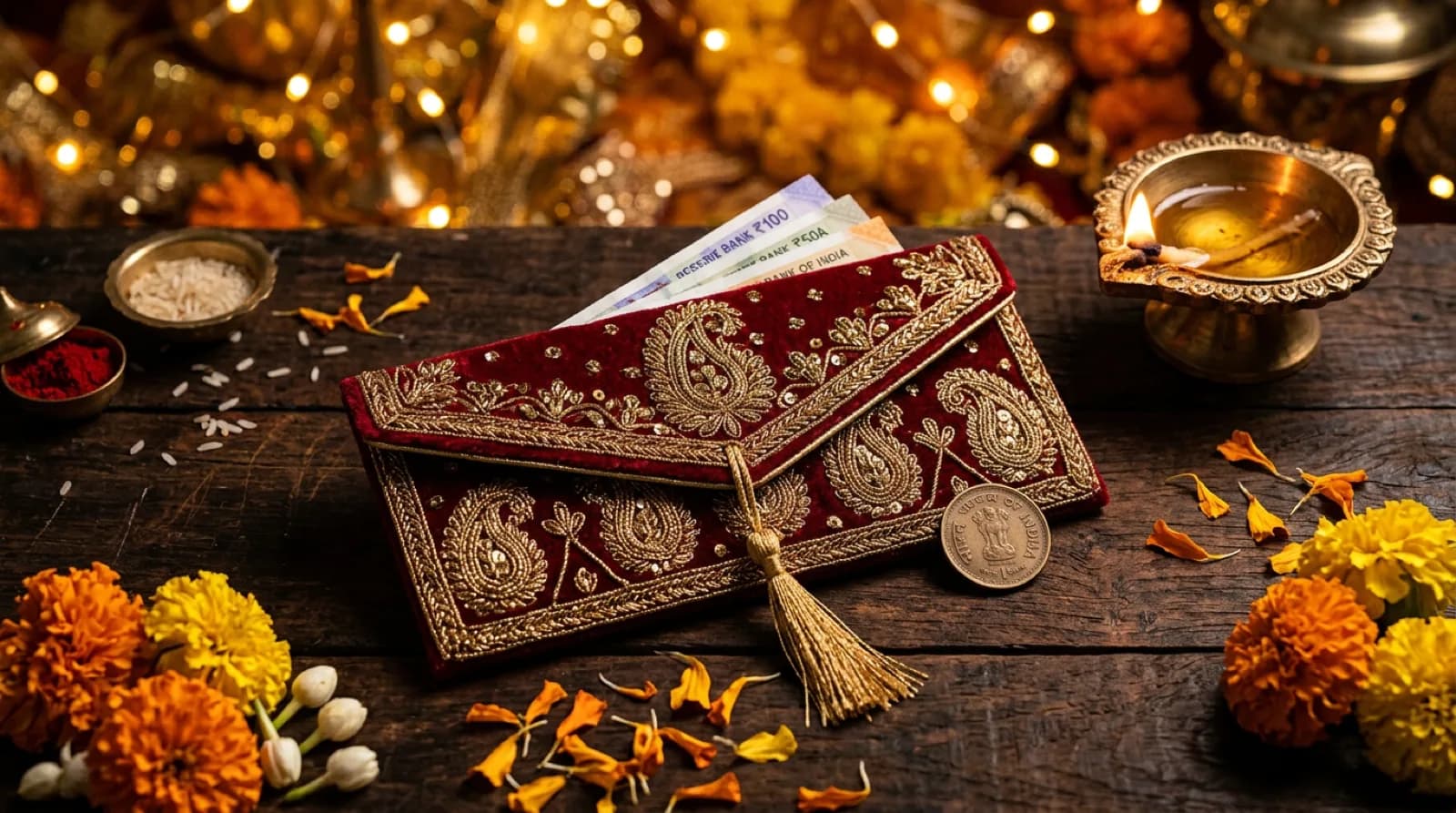
₹101 Shagun: Meaning, When to Give It, and Why the Extra Rupee Matters
Why ₹101 is the most common everyday shagun amount in India, what the extra ₹1 actually represents, and when ₹101 is the right choice versus stepping up to ₹501 or higher.
5 min read
Shagun & traditions
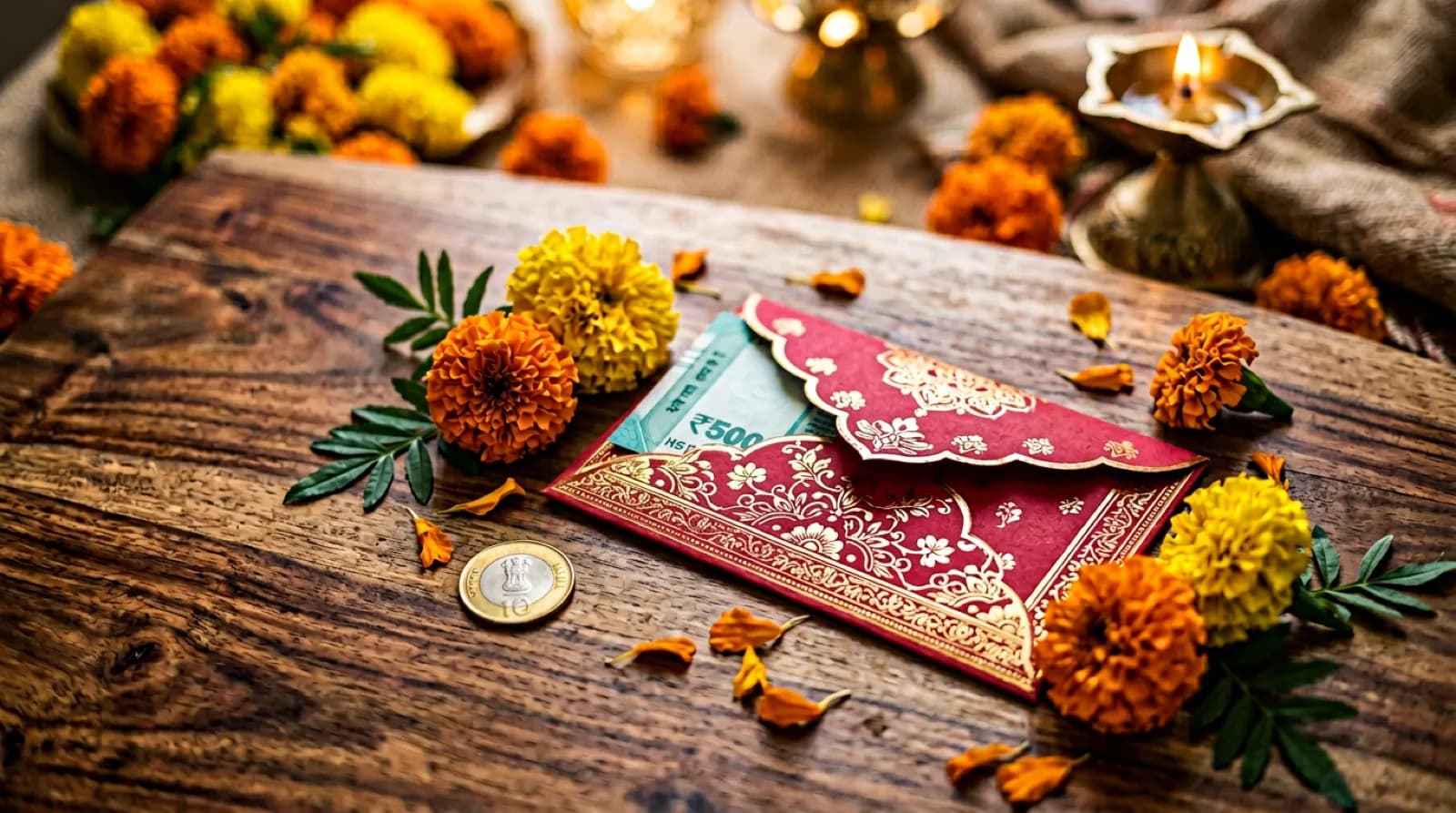
₹501 Shagun: Meaning, Cultural Significance of Five, and When to Give It
Why ₹501 is the default shagun for engagements and close-family functions in India, what the number five represents culturally, and how it sits between ₹101 and ₹1,100.
5 min read
Shagun & traditions
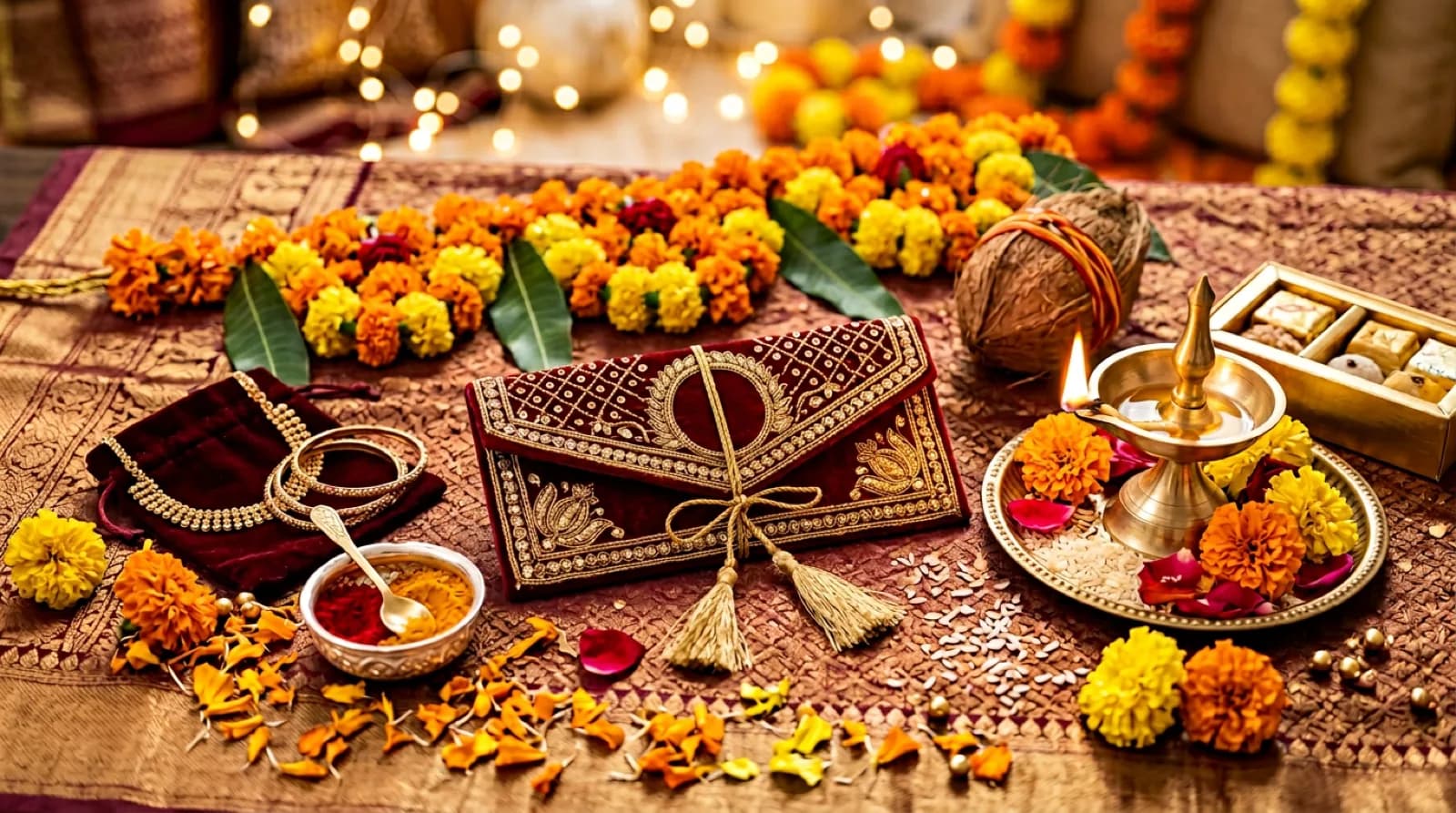
₹2,100 Shagun: The Close-Family Wedding Amount and the Significance of 21
Why ₹2,100 is the standard shagun amount from close family at Indian weddings, the cultural meaning of twenty-one in Hindu thought, and when ₹2,100 is exactly the right step above ₹1,100.
5 min read
Shagun & traditions
₹5,100 Shagun: The Immediate-Family Amount and the Symbolism of 51 Shakti Peeths
Why ₹5,100 is the immediate-family shagun amount at Indian weddings, the deep symbolism of 51 in Hindu thought — from the Shakti Peeths to the Sanskrit alphabet — and how it works as both an individual and pooled gift.
6 min read

Hindi messages
Wedding Invitation Message in Hindi: Templates for Cards, WhatsApp, and Digital Invites
Hindi and Hinglish wedding invitation message templates for cards, WhatsApp, and digital invites — with formal Shuddh Hindi versions for elders, warm Hinglish versions for family WhatsApp groups, and short scannable versions for digital invites.
5 min read