₹2,100 Shagun: The Close-Family Wedding Amount and the Significance of 21
Why ₹2,100 is the standard shagun amount from close family at Indian weddings, the cultural meaning of twenty-one in Hindu thought, and when ₹2,100 is exactly the right step above ₹1,100.
Key takeaway
₹2,100 is the shagun amount that says ‘we are family, or as good as’. It is what aunts and uncles give at nieces’ and nephews’ weddings, what first cousins give at each other’s, and what lifelong fami…
Quick meaning
₹2,100 combines the cultural significance of twenty-one — the complete person, the 21-item puja, the merged sacred numbers of three and seven — with the +₹100 continuity logic that signals an open-ended blessing.
What ₹2,100 communicates
₹2,100 is the amount you give when ₹1,100 would feel too generic for the relationship. In Indian shagun culture, the size of the gift is read socially as much as financially. ₹1,100 reads as ‘proper wedding guest’; ₹2,100 reads as ‘this is my family or as good as’. It is the amount many people remember their close relatives giving at their own weddings — not the loudest gesture in the room, but a thoughtful, deliberate step beyond the default.
Like every shagun amount built on the +₹1 logic, ₹2,100 is structured: ₹2,000 is a round milestone, and the +₹100 (more visibly than the +₹1 of smaller shagun) signals continuity. Some families use exactly ₹2,001 instead — the principle is identical, the presentation slightly cleaner.
Why twenty-one is meaningful
The number 21 has a strong presence in Hindu ritual life. It is not arbitrarily chosen — several distinct cultural ideas converge on it:
Where 21 appears in Hindu thought
- 21 aspects of a person: five jnanendriyas (sense organs) + five karmendriyas (organs of action) + five pranas (vital airs) + five bhutas (elements) + the atman — a complete model of the human being.
- Ekavimshati Patra Puja — the offering of 21 types of leaves to Lord Ganesha, particularly during Ganesh Chaturthi.
- 21-day vratas (vows) undertaken for specific divine blessings in many traditions.
- 21-count repetition of certain mantras in household practice.
- 21 modaks offered to Ganesha in some traditions.
- The compounding of two auspicious base numbers — three (the gunas) and seven (sacred in Vedic thought) — to form 21.
Combined, these associations give 21 the cultural feel of completeness — not the everyday completeness of finishing a task, but the deeper completeness of an offering that engages the whole person. That is why ₹2,100 is felt to ‘weigh more’ than ₹1,100 by a margin larger than the actual rupee difference would suggest.
When ₹2,100 is the right amount
₹2,100 is a wedding amount above all else, but it appears at several other major occasions. Common fits:
Strong fits for ₹2,100
- Weddings of first cousins, nieces, nephews, or very close family friends.
- Engagements where you are immediate family.
- Major griha pravesh of close family — first home, multi-generational home, ancestral property.
- Business inaugurations of close family members.
- Significant milestone anniversaries — silver, ruby, golden jubilee — of parents or close elders.
- Wedding of a child of close friends from your own youth or college days.
- First wedding in a family with whom you have decades of relationship.
₹2,100 vs ₹1,100 — when the step matters
The most common question people have about ₹2,100 is exactly when to use it instead of ₹1,100. The short answer is: when the relationship is closer than ‘colleague’ or ‘distant cousin’. The longer answer is about visibility, expectation, and respect.
Do
- Step up from ₹1,100 to ₹2,100 when you are first or second cousin of the host.
- Use ₹2,100 if your family has hosted the recipient at your own weddings.
- Give ₹2,100 if the host family is close enough that being seen as ‘distant’ would be hurtful.
- Use ₹2,100 for the wedding of a child of long-term family friends.
Do not
- Default to ₹2,100 for every wedding you attend — it will start to feel performative.
- Add even amounts on top (₹2,100 + ₹100 = ₹2,200 breaks the auspicious structure).
- Feel pressured into ₹2,100 if the host family is genuinely distant — ₹1,100 is respectful and correct in those cases.
Presentation conventions
Because ₹2,100 is given in close-family settings, the presentation is usually more personal than at the ₹501 or ₹1,100 level:
How families typically give ₹2,100
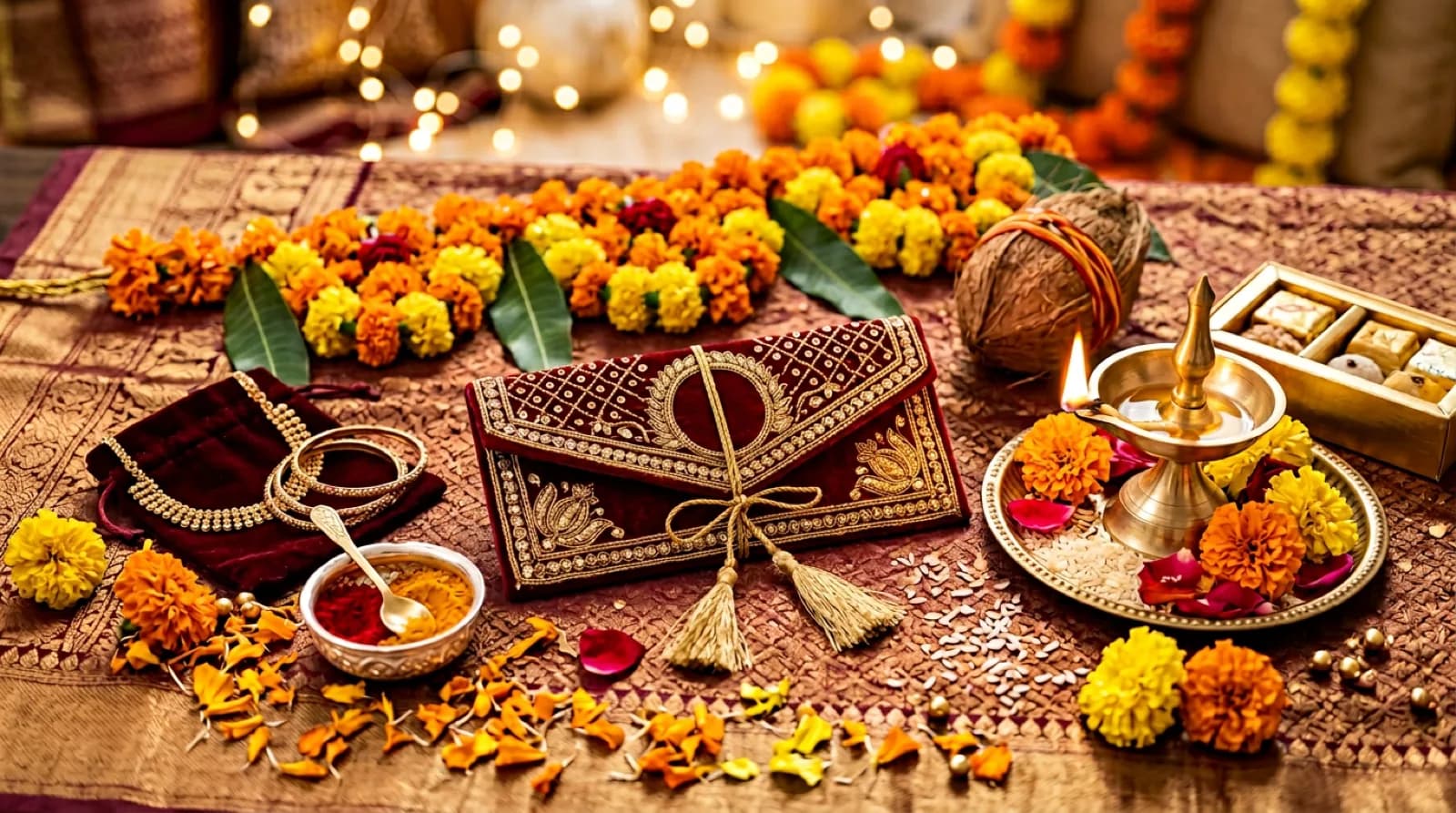
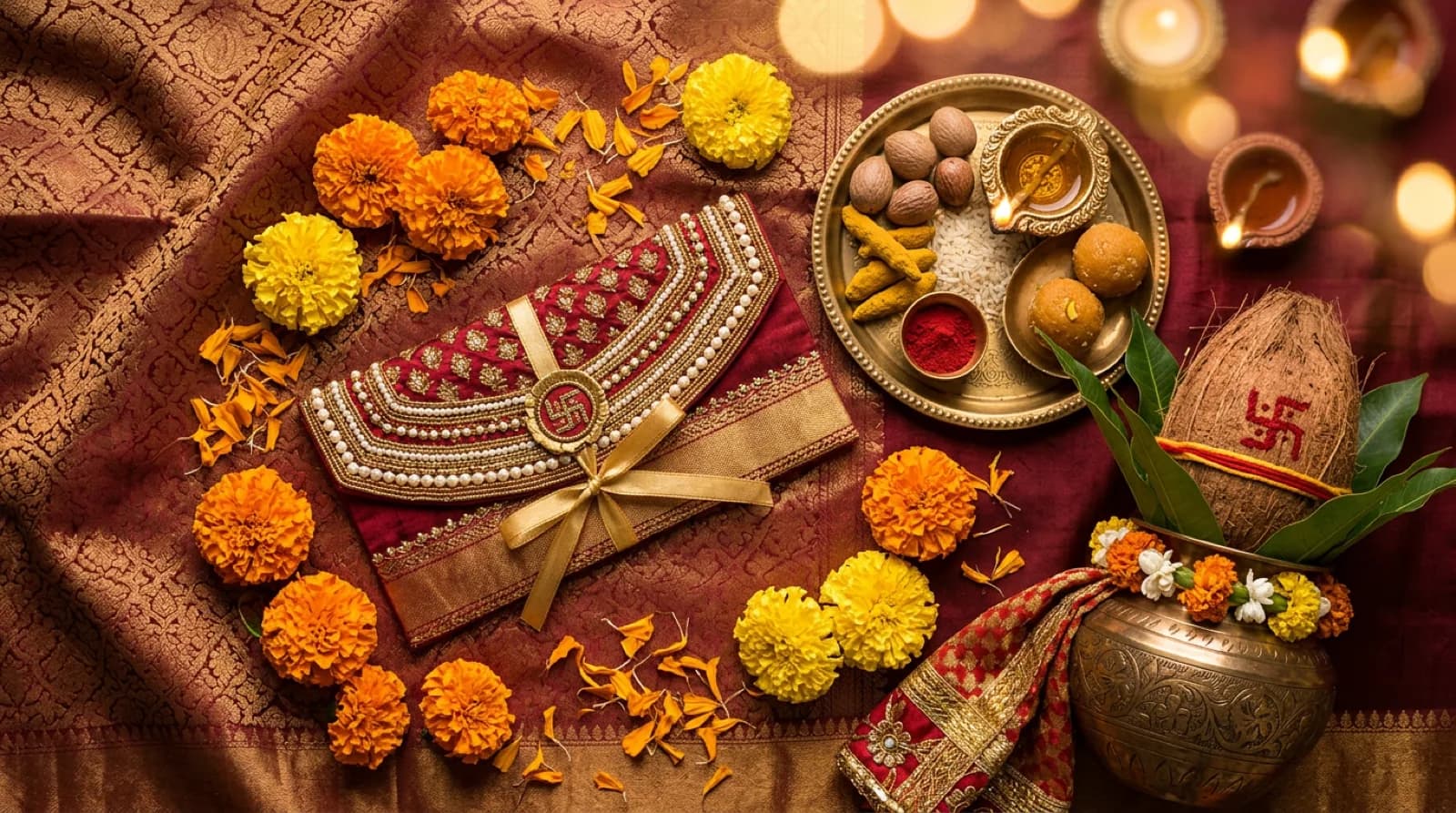
- ✓Embroidered or zari-work envelope, often with the couple’s name written or printed.
- ✓Crisp notes — typically four ₹500s and one ₹100, or twenty-one ₹100s for older relatives who specifically want the ‘twenty-one’ count visible.
- ✓Hand-delivered in person, often at a private moment rather than the chaotic public reception line.
- ✓Frequently accompanied by a small physical item — sweet box, dry-fruit tray, or family heirloom — for direct relatives.
- ✓Sometimes given on a thali for very formal first-time giving from elders.
- ✓Verbal blessing is expected, especially from elders to younger couples.
Regional and community variation
₹2,100 is most strongly established as a close-family wedding amount in Punjabi, Marwari, Haryanvi, Sindhi, and Gujarati households across North and West India. In Bengali families a similar amount may appear as ₹2,001 with sandesh or sweets. In South Indian Hindu families the close-family equivalent is often ₹2,116, ₹2,016, or ₹2,001 — with the same logical structure of a round milestone plus a small auspicious addition. Among Sikh families, ₹2,100 from close family is common, often paired with a langar contribution. In Indian Muslim families, similar amounts appear at weddings with the same odd-amount giving principle, though the cultural references behind the number are different.
Pooled and digital ₹2,100
Two patterns are increasingly common with this amount. First, pooled shagun: when six or eight close-family members each give ₹2,100, the combined ₹12,600 or ₹16,800 becomes a meaningful joint contribution often paired with a larger gift like furniture, gold, or appliances. Second, digital shagun: ₹2,100 sent via UPI is normalised at modern Indian weddings, and many wedding invite platforms now let close relatives send the amount with a personal message before the function. The cultural meaning of twenty-one is fully preserved in the digital format.
Final thoughts
₹2,100 is the amount of considered, close-family giving. It is what people give when they want their shagun to be specifically remembered — when the relationship is deep enough that the default wedding amount would feel slightly wrong. The twenty-one carries cultural weight built up across centuries of ritual life; the structure of the amount carries the wish that growth keeps going. Together they make ₹2,100 one of the most quietly significant numbers in modern Indian family life.
Yaad rakhein: Shagun ka exact amount se zyada important hota hai aapka niyat, pyaar aur blessing. Amount sirf ek symbol hai.
Helpful links
Keep exploring — invitation hubs
Templates, occasions, and wording — strong paths from this article into the product surface.
FAQs – ₹2,100 Shagun: The Close-Family Wedding Amount and the Significance of 21
Is ₹2,100 the right amount from a first cousin?
Yes. ₹2,100 is the most common first-cousin amount across North Indian weddings — clearly closer than the default ₹1,100, without crossing into immediate-family ₹5,100 territory.
Should parents give ₹2,100 or ₹5,100 at their child’s wedding?
Immediate parents typically give ₹5,100 or higher, often as part of a much larger combined gift (gold, jewellery, or property contribution). ₹2,100 is more typical from aunts, uncles, and first cousins.
Can ₹2,100 be given over UPI?
Yes. Digital ₹2,100 is increasingly common at modern Indian weddings, particularly for close family who cannot attend in person.
What is the difference between ₹2,100 and ₹2,001?
Both follow the same +₹1 continuity logic. ₹2,100 is more common in North Indian families; ₹2,001 is more common in some Bengali and South Indian households. They are culturally equivalent.
Is ₹2,100 too much for a casual wedding?
If the host is genuinely distant, ₹1,100 reads better. ₹2,100 specifically signals close relationship — using it for a casual wedding may feel slightly performative.
Read next
Continue your learning journey with these related guides.
Shagun & traditions
₹101 Shagun: Meaning, When to Give It, and Why the Extra Rupee Matters
Why ₹101 is the most common everyday shagun amount in India, what the extra ₹1 actually represents, and when ₹101 is the right choice versus stepping up to ₹501 or higher.
5 min read
Shagun & traditions
₹501 Shagun: Meaning, Cultural Significance of Five, and When to Give It
Why ₹501 is the default shagun for engagements and close-family functions in India, what the number five represents culturally, and how it sits between ₹101 and ₹1,100.
5 min read
Shagun & traditions
₹1,100 Shagun: The Classic North Indian Wedding Amount Explained
Why ₹1,100 is the default wedding shagun across North India, the cultural weight of the number eleven in Hindu tradition, and when ₹1,100 is exactly right — versus when to step further up.
4 min read
Shagun & traditions
₹5,100 Shagun: The Immediate-Family Amount and the Symbolism of 51 Shakti Peeths
Why ₹5,100 is the immediate-family shagun amount at Indian weddings, the deep symbolism of 51 in Hindu thought — from the Shakti Peeths to the Sanskrit alphabet — and how it works as both an individual and pooled gift.
6 min read

Hindi messages
Wedding Invitation Message in Hindi: Templates for Cards, WhatsApp, and Digital Invites
Hindi and Hinglish wedding invitation message templates for cards, WhatsApp, and digital invites — with formal Shuddh Hindi versions for elders, warm Hinglish versions for family WhatsApp groups, and short scannable versions for digital invites.
5 min read